

Creating environments that support individuals with autism requires thoughtful, evidence based design. Our approach focuses on reducing sensory stress, supporting independence, and enabling choice.
By carefully considering layout, lighting, acoustics, and materials, we create calm, inclusive, and empowering spaces.
Autism friendly design brings together spatial clarity, sensory awareness, and user centred thinking to create environments that support comfort, safety, and independence.
Start with a GOOD LAYOUT
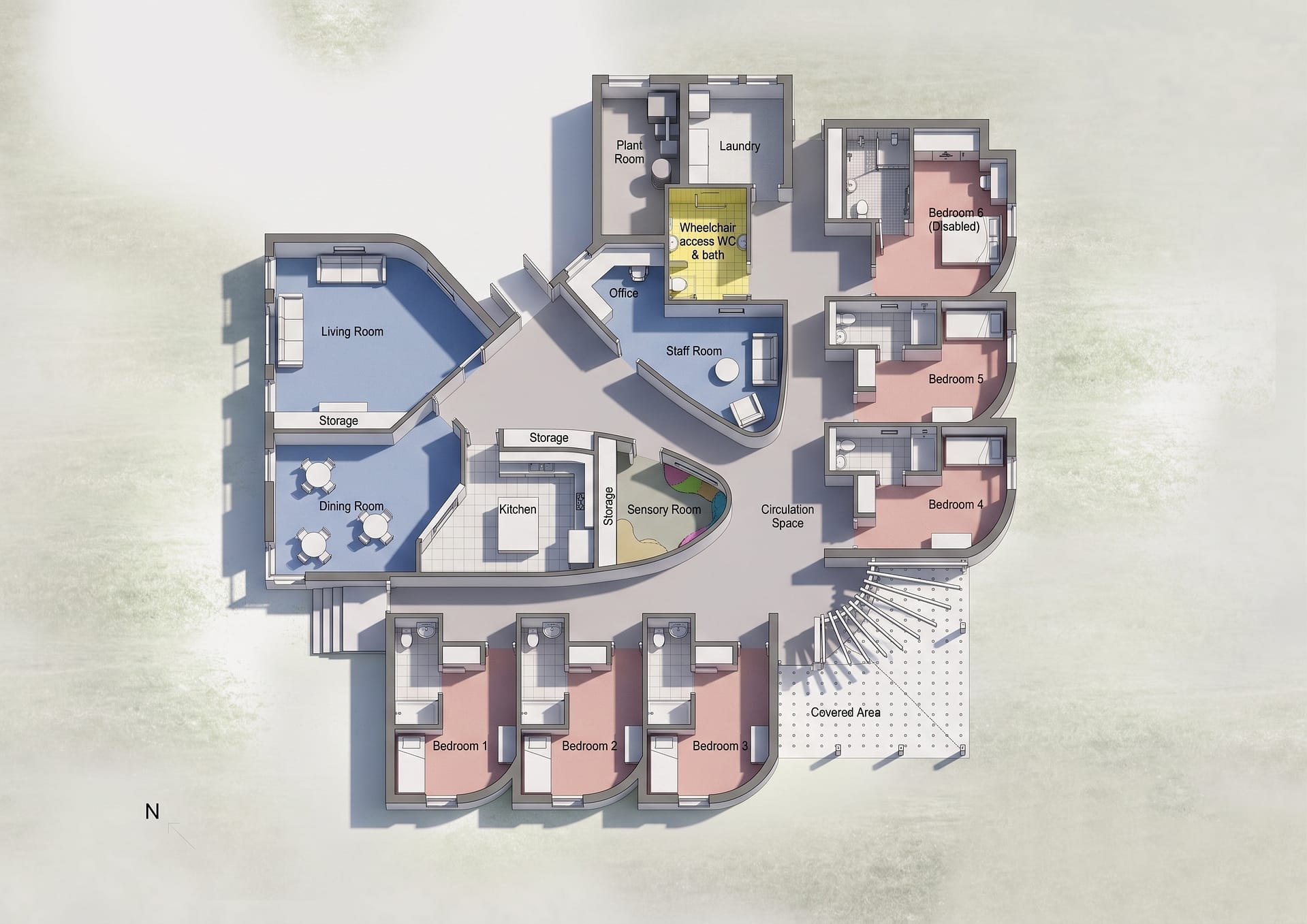
- A well considered layout forms the foundation of autism friendly design.
- Avoid narrow corridors; use open circulation with clear, legible wayfinding
- Soft, curved forms create calmer environments and reduce hazards.
- Good spatial planning creates choice, supporting independence and reducing anxiety
Good PROXEMICS
- Adequate personal space reduces anxiety caused by close proximity to others.
- Crowded spaces increase stress; layouts should allow distance and access to quieter areas.
- Seating and quiet rooms support more personal use and provide safe spaces to rest and reset.

Low arousal COLOURS and MATERIALS
- Interior finishes should support a low arousal environment.
- Use calm, muted colours and avoid highly stimulating tones.
- Keep patterns simple and avoid reflective surfaces that cause glare and sensory discomfort
- A restrained material palette supports clarity and calm.

ACOUSTIC comfort
- A quiet and controlled acoustic environment is essential.
- Excessive noise and reverberation increase stress and anxiety.
- Soft finishes and zoning contribute to a calmer environment.
- A considered acoustic strategy supports overall wellbeing.
Subtle LIGHTING
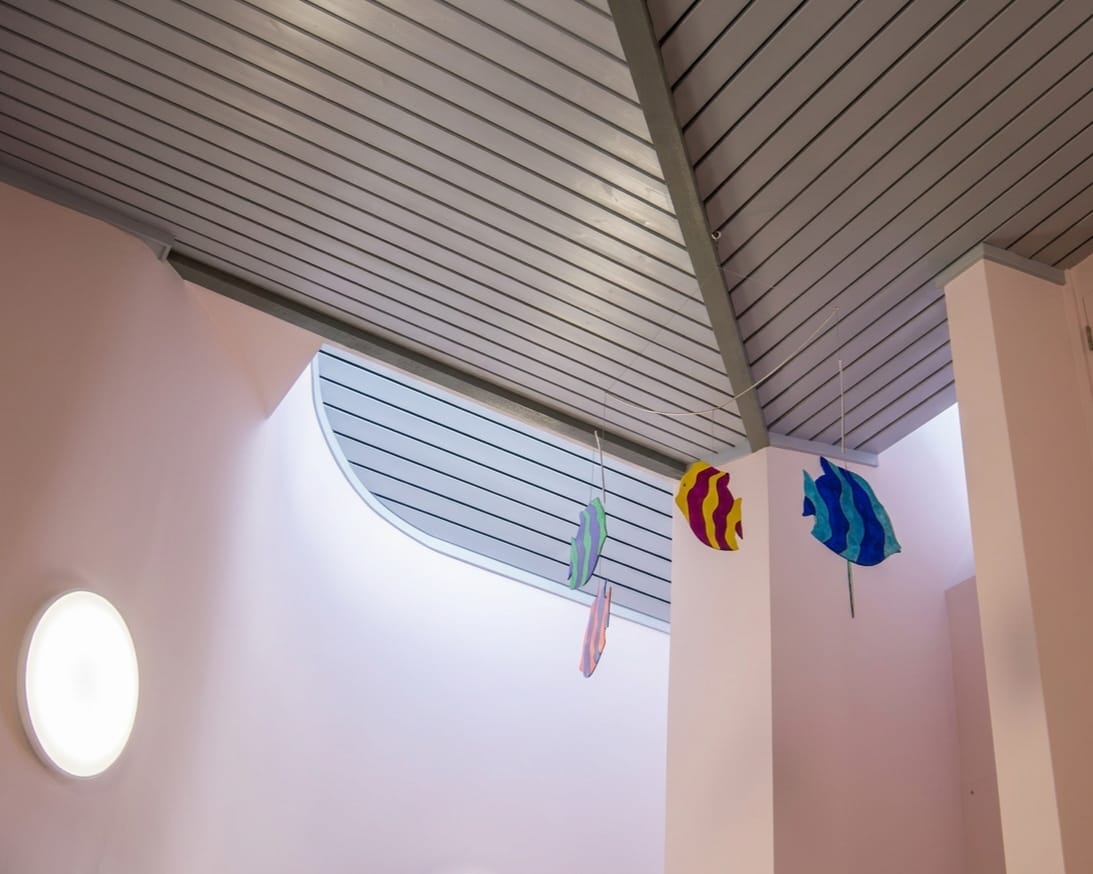
- Lighting should be soft, consistent, and adaptable.
- Avoid harsh lighting; use indirect or diffused light to reduce glare and visual discomfort.
- Maximise daylight with shading and blinds to control glare.
- Dimmable lighting supports user control.
Design for SAFETY + THERMAL COMFORT
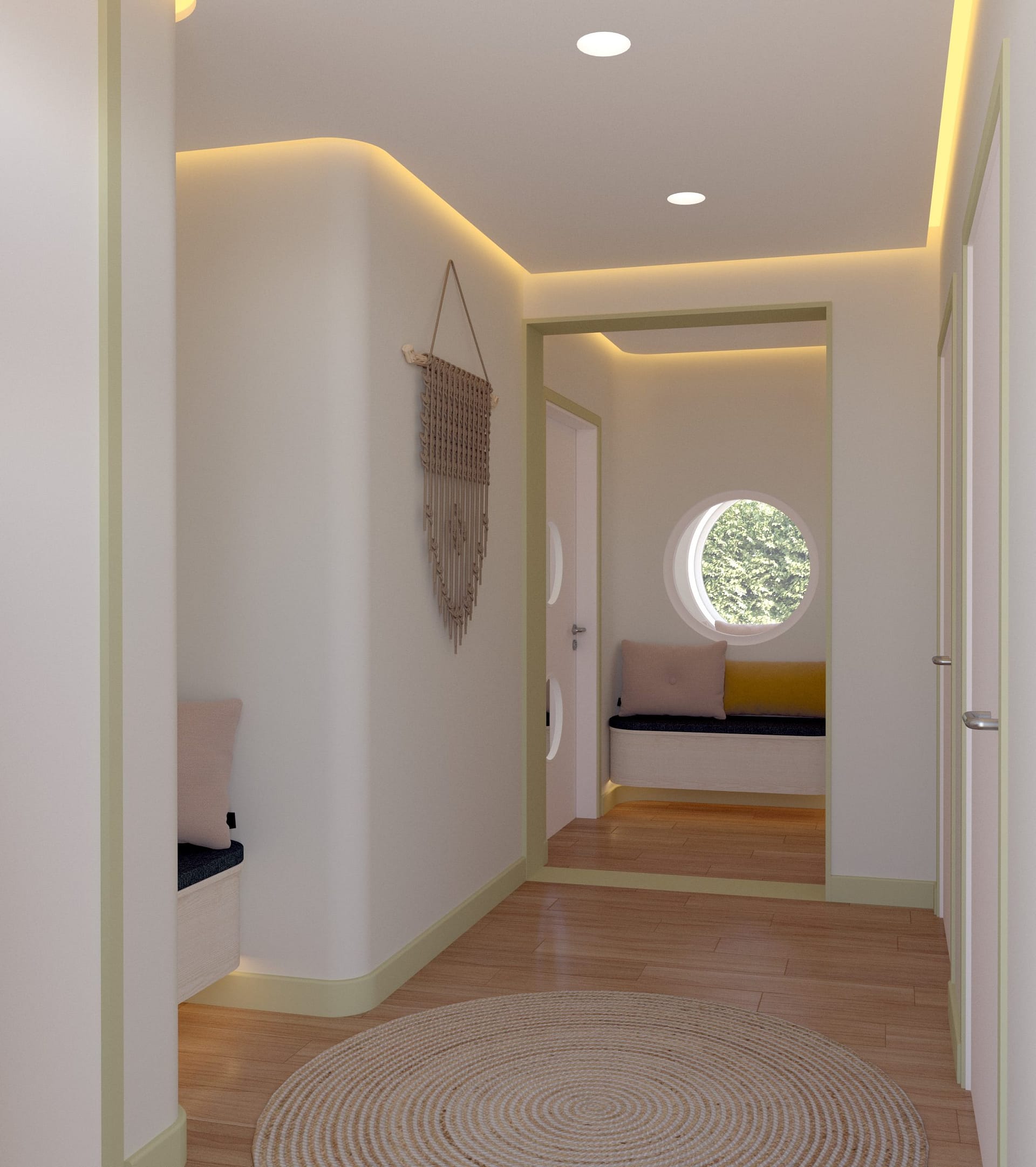
- Safety and comfort should be integrated in a subtle, unobtrusive way.
- Thermal comfort is essential to a safe and supportive environment.
- Provide good ventilation, air quality, and secure connection to the outside.
- Underfloor heating reduces hazards and provides a stable thermal environment
- Design should minimise risk without creating a restrictive environment

Unobtrusive SUPERVISION
- Design should support unobtrusive supervision while maintaining independence and dignity.
- Clear sightlines and external views reduce feelings of restriction and anxiety.
- Discrete surveillance supports safety while maintaining autonomy.

HEALTHY and SUSTAINABLE environments
- Sustainable design supports health and performance.
- Reduce energy demand, maximise daylight, and support good air quality.
- Control temperature and humidity to improve comfort and wellbeing.
- Material and environmental strategies support performance and user comfort.
